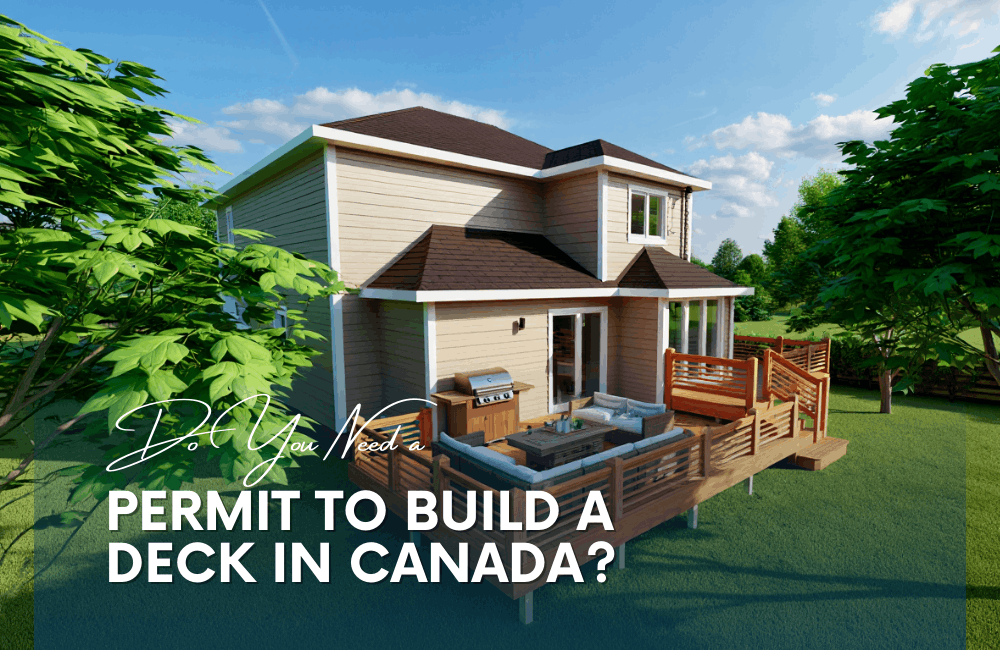
Across Canada, it is crucial to check with permit requirements before committing to the addition of a deck design. This is because municipalities have their own deck regulations that have been standardized based on climate, safety, and zoning priorities. Several factors, ranging from deck height, location, size, and attachment, are subject to influence the status of approval.
Moving forward, assuming exemptions without proper verification can drain your finances in the near future. It is advisable to understand the nuances before time to inculcate design choices that abide by legal limitations. This blog clarifies deck permit requirements and how they directly impact layout, structure, and approvals.
Why Deck Permits Exist in the First Place
Why do you need a permit to build a deck? Permits serve practical purposes that protect homeowners, neighbours, and communities. They’re not arbitrary hurdles but essential checkpoints for safety and suitability.
- Safety comes first: Decks support considerable weight, people relaxing, dining tables, and even snow accumulation through Canadian winters. Without proper footings, beams, and railings, structures can shift, sag, or fail. Permit reviews ensure plans meet established standards for load capacity, stability, and fall protection. This oversight catches issues early, preventing costly repairs or worse down the line.
- Zoning and setbacks matter too: Decks affect property boundaries and neighbourhood harmony. Rules prevent them from crowding property lines, blocking neighbour views, or interfering with utilities. Municipalities regulate decks as structures, not mere landscaping, to maintain balance between individual projects and community standards.
- Local conditions drive variation: Frost depth, soil types, and wind patterns differ regionally. Permit processes adapt national building principles to these realities. The result? A design perfect for coastal British Columbia might need adjustments inland. Understanding this context permits feel less like obstacles and more like helpful guidance.
When a Permit Is Typically Required for a Deck
When do you need a permit to build a deck? Most municipalities identify clear triggers: height, size, attachment type, and structural features. Recognizing these helps homeowners plan realistically.
- Height is the primary threshold: Decks elevated more than 0.6 metres (24 inches) above ground almost always require approval. At this level, fall risks increase, making railings and stairs mandatory. These safety elements automatically bring the project under building code review. On sloped sites, measure from the highest walking surface to the lowest ground beneath.
- Size considerations follow closely: Platforms exceeding 10 square metres (about 108 square feet) typically need review, even low ones. Larger surface areas carry greater loads, requiring verified footings and framing. Municipal staff check that plans show appropriate support for the intended use.
- Attached decks face stricter scrutiny: Connections to the house via ledger boards affect structural integrity and weatherproofing. These projects demand inspection to ensure proper flashing, anchoring, and load transfer. Freestanding decks may have more flexibility, but still trigger permits when combining height and size limits.
- Structural elements seal the requirement: Railings over 1 metre, roofs, stairs, or electrical features expand the scope. For example, a building permit in Mississauga applies to decks over 24 inches high, larger than 10 square metres, or attached to homes. Footings must resist frost heave; railings must meet strength standards. Early awareness of these factors guides practical design decisions.
Situations Where a Permit May Not Be Required
Permits aren’t universal. Certain low-risk decks qualify for exceptions, though boundaries are precise and location-specific.
- Very low decks often bypass review: Platforms under 0.6 metres above grade without railings or extensive stairs may be classified as landscaping rather than structures. These rest on surface pads, blocks, or gravel, avoiding deep footings. Proper drainage and wood elevation above soil remain essential for durability.
- Temporary or ground-level structures qualify: Seasonal platforms on movable supports sometimes avoid regulation, provided they leave no permanent trace. Time limits apply; structures lingering beyond one season typically convert to “permanent” status.
So, do you need a permit to build a small deck? Often not, if under 10 square metres, low to ground, and freestanding. However, assumptions carry risk. Lot coverage, setbacks, and drainage rules still apply. A quick call to your municipal office confirms exemption status accurately. Better safe than surprised mid-project.
Even exempt decks benefit from quality construction. Stable bases prevent shifting. Gaps between wood and earth block rot. Sound building practices extend life regardless of paperwork. Local verification ensures your platform truly qualifies, saving potential rework.
Do You Need a Permit to Build a Floating Deck?
Floating decks intrigue homeowners with their simplicity, no deep posts, and minimal excavation. But do you need a permit to build a floating deck? The answer depends on specifics.
What qualifies as floating? These rest on concrete pads, patio stones, or gravel beds at ground level. Without frost-depth footings, they accommodate soil movement naturally. Popular for DIY due to straightforward assembly and lower material needs.
- Many avoid permits when modest: Low profiles (under 24 inches), small footprints, and freestanding layouts often qualify for exemption. No house attachment means no ledger concerns. Surface supports simplify installation.
- Some still require approval: Adding stairs introduces fall risks and code geometry. Railings over 1 metre demand strength testing. Larger areas trigger load reviews.
- Misconception: floating equals temporary. Permanent installations, even low ones, may need zoning checks for setbacks and coverage.
- Location matters: Coastal areas scrutinize drainage impacts; urban zones watch lot limits. Design tip: integrate subtle grade transitions and permeable surrounds for better flow. Verify locally before digging pads. Simple platforms shine when planned thoughtfully from day one.
Permit Requirements When Replacing or Rebuilding a Deck
Existing decks eventually need attention. Do you need a building permit to replace a deck? Scope determines the answer.
- Repairs stay simple: Swapping weathered boards, tightening loose railings, or refreshing stain typically skips permits. Cosmetic updates preserve the original structure without altering loads or supports.
- Full replacement triggers review: Removing posts, beams, or ledgers equals new construction. Current codes demand deeper footings, stronger guards, and updated connections. Older decks often fall short of modern standards: shallow posts, low railings, and inadequate bracing.
- Structural changes expand scope: Extending footprints, raising heights, or adding roofs convert projects to full approvals. Even partial rebuilds like new stairs, may qualify if affecting safety elements.
- Aged decks frequently prompt scrutiny: Past informal builds lack records, raising compliance questions. Replacement offers opportunity: modern materials, better flow, enhanced safety. Professional plans document upgrades clearly, easing resale and insurance concerns later.
What Happens If You Build a Deck Without a Permit
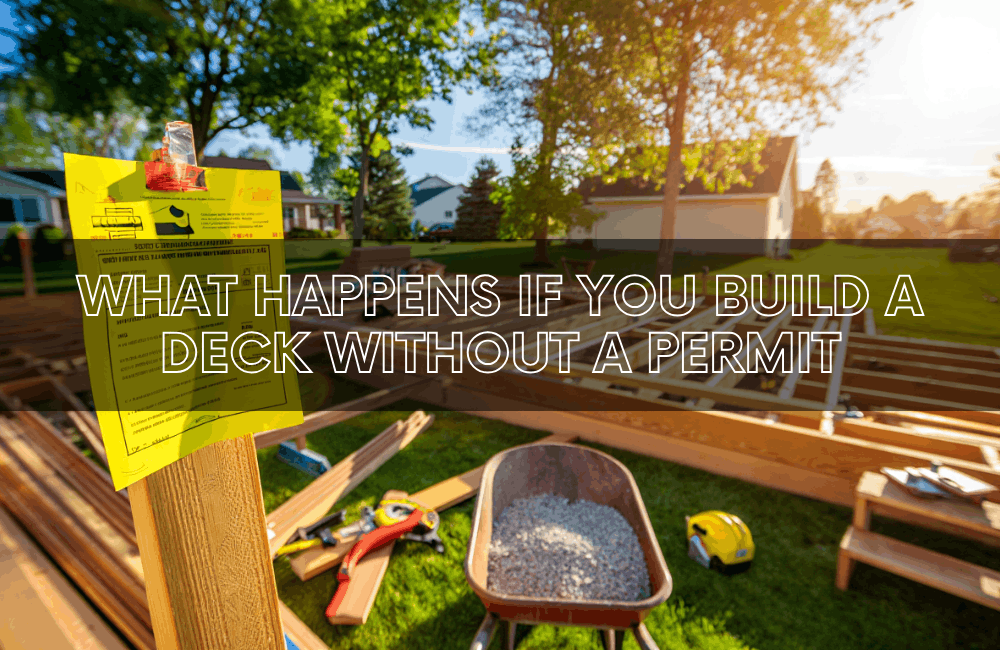
Skip permits at your own risk, not to scare, but to inform. Issues arise practically, not dramatically.
- Inspections create friction: Neighbours spot work; officials investigate. Stop-work orders pause progress until plans are submitted. Opening framing for review adds cost and delay.
- Fines accumulate modestly: Most range $100-1000 initially, escalating with non-compliance. Less painful upfront than cumulative rework.
- Resale reveals gaps: Buyers’ inspectors flag undocumented additions. Lenders hesitate without proof. Negotiations sour, price drops, removal demands, or rushed retroactive filings. Missing records hurt more than permit fees ever would.
- Insurance: notes unpermitted work, too. Claims tied to structural issues may face scrutiny. Documentation proves due diligence.
- The practical path: treat permits as insurance. A brief review now prevents larger headaches later. Clear records protect value long-term.
How Deck Design and Planning Can Help Avoid Permit Issues
Smart design turns permits from a hurdle to an advantage. Early planning aligns vision with reality.
- Planning reveals constraints upfront: Site visits map setbacks, slopes, and utilities. Height limits guide layouts. Zoning checks confirm coverage. Adjustments happen on paper, not during framing.
- Designers and builders streamline compliance: Professionals know local quirks, Mississauga’s lot rules, and rural frost variances. They draft clear drawings showing footings, connections, and railings. Reviewers approve faster; inspectors find fewer faults.
- Drawings build trust: Precise plans detail every beam, every fastener. Elevations show neighbour impacts. Sections explain load paths. Complete packages reduce questions, speed stamps.
Dinh Design exemplifies this approach. Thoughtful layouts respect codes while maximizing enjoyment. Custom details like integrated planters or curved stairs fit regulations elegantly. Collaboration ensures smooth approvals, beautiful results.
Understand how your municipality regulates deck construction!
Deck permits balance safety, harmony, and practicality across Canada’s diverse communities. Height over 24 inches, sizes above 10 square metres, house attachments, these typically require review. Low platforms and floating decks often qualify for exceptions, though local checks confirm.
Floating decks offer simplicity; replacements demand modern standards. Repairs stay permit-free, but rebuilds refresh safety. Unpermitted work risks delays, fines, resale friction, and can be avoided with upfront planning.
Check your municipality early. Sketch basic ideas. Consider professional input. The right preparation turns permit questions into project confidence, delivering outdoor spaces built to be enjoyed for years.
Frequently Asked Question (FAQs)
Most decks over 600 millimetres high or 10 square metres require permits, though regulations vary significantly by municipality. Always contact your local building department to confirm exact requirements for your specific property and project scope.
Ground-level platforms under 600 millimetres, when freestanding and modest in size, often avoid permit requirements. However, setback and zoning compliance always apply regardless of exemption status.
Yes, if elevation exceeds 600 millimetres or the footprint surpasses 10 square metres. Concrete pier systems don't exempt structures from code adherence or municipal approval obligations.
Decks exceeding approximately 10 square metres generally require permits, particularly when combined with elevation or attached construction methods. Municipal standards vary, necessitating local confirmation.
Minor cosmetic repairs and refinishing typically avoid permit requirements. However, full structural replacement, dimensional changes, or material transitions to composites generally demand formal approval compliance.
Consequences include enforcement stop-work orders, substantial fines exceeding $50,000, mandatory retrofits, significant resale complications, and potential insurance claim denials. Retroactive applications incur substantially higher costs.
No. Municipal regulations adapt provincial building codes according to local climate conditions, density patterns, and enforcement priorities. Toronto, Calgary, and Vancouver enforce distinctly different regulatory frameworks.
Standard applications process within two to four weeks, typically. Complex designs or peak submission seasons may extend timelines considerably. Comprehensive documentation accelerates municipal approval cycles significantly.
Yes, licensed contractors and professional designers routinely manage permit submissions and municipal inspections. Clear contractual agreements regarding responsibilities and approval conditions prove essential before work begins.
Professional design consultation ensures regulatory compliance integration from conceptual development, preventing costly revisions and substantially expediting municipal approval processes throughout application cycles.
Not sure if your deck needs a permit? Let’s review your plans together
Planning a deck involves more than design alone. Understanding permit requirements early can help avoid delays and costly changes. Dinh Design supports homeowners with thoughtful deck design solutions aligned with local building requirements.