Dinh Design is one of the top-rated architecture firms in Toronto, with 8+ years of experience delivering residential and commercial projects across Canada.
Dinh Design is a Toronto-based architecture firm delivering residential and commercial design services across the city — from laneway suite conversions in Roncesvalles to multiplex retrofits in East York and commercial fitouts in heritage buildings along King Street West. We begin every project with a thorough zoning certificate review and site-specific bylaw analysis before any design decisions are made. That is what keeps permits on track and budgets honest. From minor variances to heritage approvals, our team has worked across every ward with a deep understanding of the full approval landscape in this part of Canada. Schedule a consultation today to get direct answers on your site, timeline, and costs.
Request a consultation to discuss your project with our team.
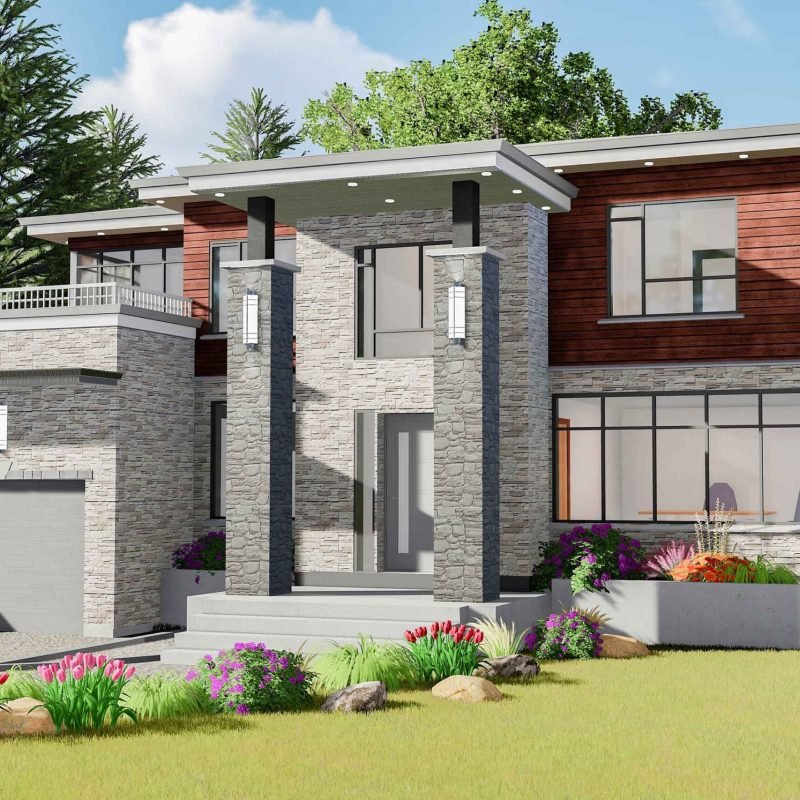

Our team has delivered 200+ projects across the Greater Toronto Area over the past 8 years, translating ambitious visions into enduring, highly functional spaces. We proactively navigate the region’s unique planning and building landscape to protect your investment from early planning through final approval.
We have spent over 8 years navigating local planning systems on residential and commercial projects. In that time, we have learned that a pre-amalgamation site-specific bylaw from former North York can quietly override Bylaw 569-2013, and that this critical detail does not surface until you pull the full zoning certificate. We catch these issues before they become expensive surprises.
Rear additions on 18-foot laneways in Little Portugal, multiplex conversions on corner lots in East York, ground-floor commercial retrofits in heritage buildings along Queen Street West, new infill construction between party walls in Cabbagetown, laneway and garden suite conversions, and change-of-use permits in commercial spaces where prior occupancy was never properly documented.
| Feature | Dinh Design | Typical Local Firm |
|---|---|---|
|
Zoning review before design starts |
Always included |
Rarely offered |
|
Pre-amalgamation bylaw knowledge |
Deep expertise |
Limited or none |
|
Committee of Adjustment representation |
Full representation |
Not always available |
|
Heritage planning coordination |
In-house |
Third-party referral |
|
First-submission approval focus |
Core process |
Reactive approach |
|
Transparent phased fee proposals |
Always provided |
Often unclear |
Most homeowners and developers do not hire an architecture firm every year. When the need arises—for an addition, a multiplex conversion, or a commercial fitout—the decision carries real consequences. A firm that does not understand how local building district offices operate or has never presented before the Committee of Adjustment will be learning from your project. Here is what actually separates firms that deliver from those that do not.
Design skill in a Toronto architecture firm means solving problems specific to your site. A rear addition on a 20-foot lot in Roncesvalles requires a completely different approach than a second-storey addition on a 40-foot detached in North York. Look for a firm that designs around your actual zoning class, angular plane limits, and lot coverage ceiling—not one that creates a concept first and figures out bylaw conflicts afterward.
Permit approvals in this region are not a formality. The local building department simultaneously reviews for zoning compliance and Ontario Building Code conformance, and complex residential projects are currently averaging ten to fourteen weeks for a first review. A firm with genuine approval experience knows how to front-load submissions to avoid conditional refusals and to prepare a minor variance application that satisfies all four tests under the Planning Act.
The planning system rewards firms that know the specifics—which pre-amalgamation bylaws are still active in former Scarborough and Etobicoke, which heritage conservation districts apply stricter angular plane interpretations, and which Committee of Adjustment district panels have tighter submission windows. This knowledge comes from working consistently within the system, not from reviewing it occasionally.
Transforming a property here requires technical precision, municipal expertise, and high-performance execution. As one of the more reliable architectural firms in Toronto, Dinh Design delivers end-to-end architectural design services tailored to the realities of the local market. Our comprehensive approach ensures your investment is protected from the earliest conceptual planning phases through to final occupancy.
We engineer ground-up properties that maximize Floor Area Ratio (FAR) while strictly adhering to complex angular plane and setback requirements.
We optimize high-density urban living spaces, transforming underutilized properties through strategic multiplex conversions and laneway suite integrations.
We blend modern rear extensions or third-storey additions into older masonry homes, preserving heritage features while updating structural loads.
We complete adaptive reuse and interior build-outs for retail and office spaces, ensuring full compliance with AODA and local fire codes.
We produce clear sets of clash-coordinated architectural designs in Toronto. These sets help avoid common examiner deficiency notices and speed up clearance through the city’s online building portal.
We provide photorealistic spatial renderings and lighting analyses to secure stakeholder buy-in and eliminate costly design ambiguity before construction begins.
Our reputation among top-tier architectural practices is built on delivering reliable outcomes on complex, high-value projects. At Dinh Design, we differentiate ourselves by ensuring your vision survives the realities of the city planning process in this part of Canada.
With 8+ years of dedicated service, our team navigates complex zoning laws and Toronto Green Standard (TGS) requirements with confidence. We know the approval landscape in ways that only come from working within it, consistently, year after year.
Our team is skilled at obtaining approvals for projects that do not fully comply with zoning requirements (such as setbacks, height, or lot coverage). These approvals are difficult to secure, and having a skilled team increases the chances of success. We identify and resolve issues before a city reviewer flags them.
The entire process is clearly structured and communicated in both directions. The use of advanced 3D modelling allows you to visualize the design closely and identify issues before moving ahead. This ensures informed decisions before any permits are submitted.
The design process is initiated by what drives value for you. Decisions are guided only after understanding your functional yield, your need for usable space, and its long-term market value. The outcome is visually compelling architecture that aligns with your investment goals.
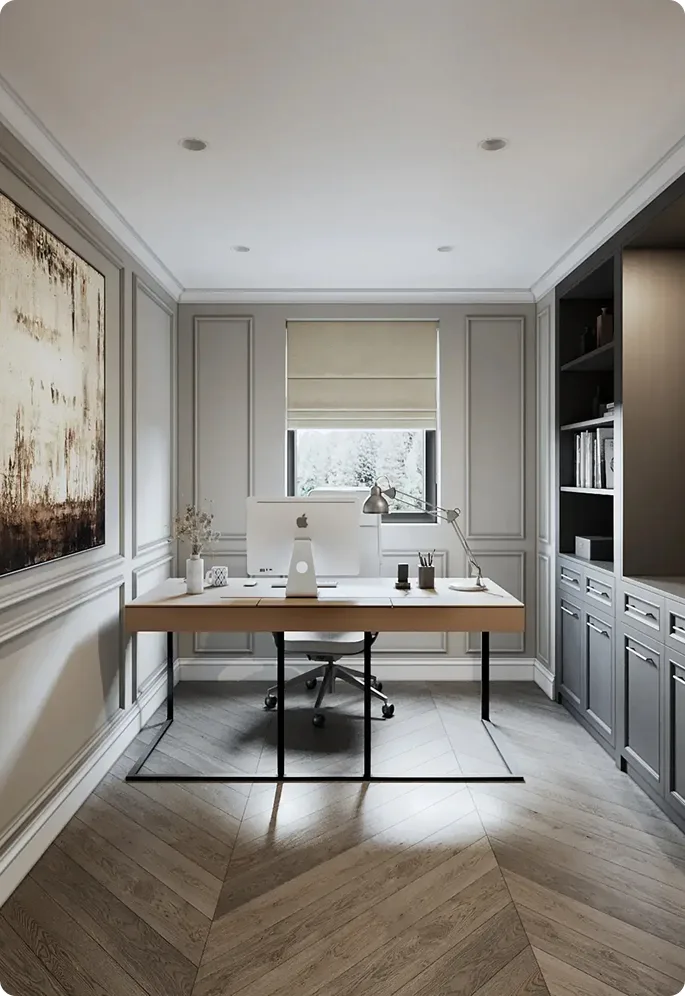
Known as one of the best architectural design firms in Toronto, our experience has helped clients solve difficult problems that other firms could not navigate. In one case, a client purchased a sloped property in the Beaches with restrictions from Urban Forestry and the Toronto and Region Conservation Authority. A standard rear extension would have been rejected. Our team used smart structural solutions, strengthened the basement, and extended the upper floors without disturbing the protected tree canopy. The result was a 35% increase in usable space, with approvals secured efficiently.
Projects fail most often because of skipped steps, missed pre-consultation windows, and assumptions that do not survive contact with the City. Here is exactly how we move a project from the first conversation to an approved permit.
Most firms start with a blank page. We start with your site’s actual constraints.
Our portfolio spans the full range of residential and commercial project types. Each engagement below represents a real regulatory challenge, a specific site, and an approval outcome our team secured on behalf of the client.
A semi-detached property on a 16-foot lot in Leslieville, immediately adjacent to a designated heritage structure. The client needed a full rear extension and third-floor addition. The site's proximity to a heritage property triggered additional design review by Heritage Planning. Our team produced a shadow study and street elevation analysis demonstrating no adverse impact on the heritage property's character-defining elements. The permit was approved without a Committee of Adjustment hearing.
A 40-foot corner lot in East York is designated for multiplex conversion under updated as-of-right multiplex permissions following 2023 zoning amendments. The corner lot created angular plane exposure on two street frontages simultaneously. We modelled the massing to comply with the angular plane requirements from both streets while maximizing the number of units. The result was a four-unit multiplex that maximized allowable gross floor area without requiring a minor variance.
A ground-floor retail unit in a heritage building on King Street West required conversion from a former restaurant to a professional office. The change of use triggered a full Ontario Building Code review, including occupancy load calculations, egress analysis, and AODA accessibility compliance for the building entry. We prepared the full permit drawing set, coordinated with the mechanical engineer on HVAC changes, and obtained clearance from Heritage Planning on exterior modifications to the storefront.
We work across every ward in Toronto and throughout the surrounding municipalities. Our knowledge of local planning systems, district offices, and Committee of Adjustment panels extends across the GTA and other key regions of Canada where similar bylaws apply.
Every municipal jurisdiction has its own planning department protocols, submission requirements, and review timelines. Our team knows the specific procedures for each, including which pre-application consultations are required, which are optional but strategically valuable, and how to structure submissions to minimize review cycles in each office.

If you have a property and a project in mind, the first step is a direct conversation about what your site can support and what it will take to get there. At Dinh Design, we do not sell you a design before we understand your zoning constraints. We start with the facts of your site, we tell you exactly what is possible, and we give you a realistic picture of the approval timeline and cost before any design fee is committed.
We have spent 8+ years delivering residential and commercial projects across every neighbourhood and ward in this region of Canada. We know how local building departments operate, we know the Committee of Adjustment panels, and we know how to navigate the approval process efficiently on your behalf.
Schedule a Consultation: Contact Dinh Design today to discuss your site, project goals, and how we can protect your investment from the first drawing through final approval.
Posted on Google
 Thuỳ Anh
Trustindex verifies that the original source of the review is Google.
ĐẹpppppPosted on Google Anne SteinbergBach exceeded my expectations! Bach is knowledgeable, patient, polite, helpful, and friendly. The entire process was stress-free and smooth from site measuring, drawings, and permit application. He helped me understand the process and answered all of my questions. So many thanks for all of your help, and excellent outstanding service. Thank you very much Bach. I would highly recommend Dinh Design to other customers.Posted on Google
 Truong NguyenThe services provided by Dinh Design are very professional and satisfied.Posted on Google
 Harry NguyenBach helped me to design my large basement and applied building permit in the city of Waterloo. He is knowledgeable, provided an exceptional customer service with a reasonable price. He followed up with me at every stage of construction, giving me advices. I am totally satisfied with his service and highly recommend him for your future projects.Posted on Google
 Andy LuuAffordable and Exceptional Service for Building Permits! I couldn't be more pleased with the outstanding service provided by Mr. Bach at Dinh Design. Obtaining a building permit can often be a cumbersome process, but Bach made it seamless and stress-free from start to finish. His knowledge and expertise in navigating the permit process were evident right from the beginning. He guided me through each step, ensuring all the necessary documentation was in place and handled every aspect efficiently. His attention to detail was impressive, catching potential issues before they became problems. Moreover, His professionalism and responsiveness were remarkable. Any queries or concerns I had were addressed promptly and comprehensively. Bach went above and beyond to ensure I felt supported throughout the entire process. The end result? A smooth and swift permit approval, allowing me to proceed with my project without any delays. I highly recommend Dinh Design to anyone in need of a reliable and efficient service for building permits. I also appreciate how Dinh Design balanced affordability with quality service. He made the permit acquisition process smooth and hassle-free without breaking the bank. I highly recommend Bach's company to anyone seeking a trustworthy service that delivers exceptional results at a reasonable price. Thank you for your outstanding support!Posted on Google
 Ryan LWe reached out to Dinh Design after getting several quotes from other architects to provide us with a drawing that we could submit to the city for a permit. Bach was considerate, on time, knowledgeable and extremely helpful throughout the entire process! He took care of everything from start to finish and made revisions at our request. I would highly recommend Dinh Design for any permit needs! Thank you Bach! R.LPosted on Google
 Lộc SteveMy go to architect for everythingPosted on Google
 Quyen NguyenAmazing service received by Dinh Design. They did the great job for me to get the permit from the city . All you need to do is contact with Bach from Dinh Design. He will help you from beginning until the end 🤩
Dinh Design provides architectural design and building permit services in Toronto and surrounding GTA communities. We work with homeowners, developers, and businesses on custom homes, renovations, additions, and other design projects, with each project tailored to its property, municipal requirements, and intended use.
Look for a firm with deep local expertise in zoning bylaws, a strong portfolio matching your project type, and a transparent fee structure. Ensure they have a proven track record of navigating the Committee of Adjustment and building department processes. The best architectural design firms in Toronto review your zoning certificate and site constraints before they charge you for design work.
Design fees typically range from 8% to 15% of your total construction budget, depending on project complexity. Factors include the type of approval required (building permit only, or Committee of Adjustment variance), the number of consultant trades involved (structural, mechanical, civil), and the complexity of site constraints. At Dinh Design, we provide detailed, phased fee proposals upfront so you understand exactly what you are paying for, with no hidden costs.
Timelines vary significantly based on project complexity. Standard building permits for straightforward residential work currently take four to eight weeks for the building department to issue a first review. Projects requiring Committee of Adjustment approvals can take four to six months from application to hearing. Projects requiring heritage review or Official Plan amendments can extend beyond twelve months. We front-load our submissions with complete, coordinated drawing sets to minimize examiner review cycles and reduce total timelines.
Yes. Most significant renovations require building permits. This includes structural changes, underpinning basements, plumbing or electrical system overhauls, adding new dwelling units, altering the exterior envelope of a building, and any changes to the building's occupancy classification. Cosmetic upgrades like painting, flooring replacement, and kitchen cabinet installation generally do not require permits. Our team handles all permit submissions and coordinates with city examiners throughout the review process.
Full-service design firms like Dinh Design manage your project from initial concept through to occupancy. This includes schematic design, 3D visualization and spatial modelling, structural coordination, zoning bylaw review and variance applications, complete permit drawing preparation, and construction administration to verify the contractor is building to the approved drawings. We also handle pre-application consultations with city planning staff and represent clients at Committee of Adjustment hearings.
Yes. We regularly prepare and present applications at the Committee of Adjustment across four district panels. This includes the application materials (survey, plans, shadow study, streetscape analysis), the written justification addressing all four Planning Act tests, and representation at the hearing. We have successfully obtained minor variances for projects involving setback reductions, lot coverage exceedances, and height increases across many neighbourhoods.
The best design firms combine strong design capability with deep technical knowledge of the local approval environment. They understand how building district offices operate, they know which committee panels have tighter submission requirements, and they know how to structure applications to minimize the risk of conditional refusals. They also communicate clearly at every stage so you always know where your project stands.
The earlier, the better. Engaging a design firm before you purchase a property allows us to conduct a feasibility study and identify hidden zoning constraints before you commit capital. For existing properties, engaging before you finalize your renovation scope or budget allows us to confirm what your site can actually support, what constraints you need to plan around, and what the realistic permit timeline will be. Early engagement consistently reduces total project cost by avoiding design revisions driven by regulatory conflicts discovered late in the process.
A building permit application is submitted through the City's online building portal and requires a complete drawing set (site plan, floor plans, elevations, sections), a completed application form, a property survey, and applicable fees. For residential projects, the drawings must demonstrate compliance with both Zoning By-law 569-2013 and the Ontario Building Code. Our team prepares all application materials, submits on your behalf, and manages all communication with the city's permit examiners through to permit issuance.
Yes. Laneway suites require a building permit and must comply with Zoning By-law 569-2013 laneway suite provisions, as well as site-specific setback, height, and lot coverage rules. Submissions also require coordination with Urban Forestry if protected trees are nearby. A design firm experienced with laneway suite approvals will conduct a site feasibility review, confirm maximum gross floor area, and prepare a permit-ready drawing set that meets building department submission requirements.
A minor variance is an approval from the Committee of Adjustment that allows a project to proceed even though it does not fully comply with one or more provisions of the Zoning By-law, such as setbacks, height, or lot coverage. You need a minor variance when your proposed project exceeds what the applicable Zoning By-law permits, and the deviation cannot be accommodated through another approval route. Applications must satisfy all four tests under Section 45(1) of the Ontario Planning Act. Minor variance hearings are held at one of four Committee of Adjustment district panels, and current timelines from application to hearing range from eight to sixteen weeks.
A zoning certificate confirms that a proposed use or structure complies with the applicable Zoning By-law. A building permit confirms that the proposed construction complies with both the Zoning By-law and the Ontario Building Code. In most cases, zoning compliance is reviewed as part of the building permit process. However, for projects where the scope of work is uncertain, requesting a zoning certificate first allows you to confirm what your site can support before investing in full design and permit drawings. At Dinh Design, we conduct a zoning certificate review at the start of every project — before any design fees are committed.
Construction costs for a laneway suite typically range from $250,000 to $450,000 or more, depending on size, finishes, and site-specific conditions such as grading, drainage, and utility connections. Design and permit fees add approximately 10% to 15% of total construction cost. The final cost depends heavily on the size of the suite permitted under the zoning bylaw for your specific property, the condition of the existing laneway, and the proximity of existing services. We provide a detailed feasibility assessment that includes a realistic cost range before any design work begins.
Yes, in many cases. If your property is adjacent to a public laneway and the existing garage footprint meets or can be modified to meet laneway suite zoning requirements, a conversion may be permitted. The process typically involves confirming the laneway is publicly owned and accessible, verifying that the existing or proposed structure meets the height, setback, and gross floor area limits, and obtaining a building permit for the conversion. Some properties also require variance approval if the proposed suite exceeds as-of-right permissions. Our team conducts a full site feasibility review to confirm whether your garage qualifies before any design work begins.
In 2023, the City amended Zoning By-law 569-2013 to allow as-of-right multiplex development — meaning up to four residential units — on most residential lots, without requiring a rezoning or minor variance. However, the number of units permitted, the maximum gross floor area, and the setback, height, and lot coverage requirements vary by lot size, zoning class, and location. Corner lots, properties adjacent to heritage structures, and lots with tree protection orders may have additional constraints. Our team reviews your specific lot against the updated multiplex provisions to confirm how many units are achievable and what design parameters apply.
Ready to bring your dream project to life? Contact Dinh Design — one of the most trusted architecture firms in Mississauga — for a free consultation and detailed project quote.

Address
100D – 4275 Village Centre Court, Mississauga, ON L4Z 1V3
Call Us
Email Us
Office Hours
Mon-Fri 9am – 6pm