Starting a renovation, home addition, basement project, or new build in Ontario?
Before any construction begins, you’ll usually need a building permit. One of the biggest reasons permits get delayed is missing paperwork or incomplete drawings.
Many homeowners are surprised by how detailed permit applications have become in 2026.
Whether you’re applying for a building permit in Mississauga or another Ontario municipality, documentation requirements continue to become more detailed. Municipalities across Ontario now review applications more carefully to make sure projects meet zoning rules, structural safety standards, and Ontario Building Code requirements.
At Dinh Design, homeowners often reach out for help preparing permit drawings and application packages that are clear, accurate, and ready for submission.
This guide explains the most common building permit application documents required in Ontario and what you should prepare before submitting your application.
Why Building Permit Documents Are Important
Building permit documents help municipalities understand exactly what work is being planned.
These documents are reviewed to confirm the project:
- Meets Ontario Building Code requirements
- Follows local zoning rules
- Maintains structural safety
- Protects neighboring properties
- Meets fire and energy efficiency standards
If documents are missing or unclear, the city may request revisions before moving forward with approval.
That can slow the project down and increase costs.
What Projects Usually Require a Building Permit in Ontario?
Many residential and commercial projects require permits before construction starts.
Common examples include:
- Home additions
- Basement renovations
- Secondary suites
- Structural renovations
- Removing load-bearing walls
- Deck construction (many homeowners ask whether they need a permit to build a deck, and permit requirements often depend on the deck’s size, height, and location)
- Garage construction
- Major interior remodeling
- Commercial renovations
- New home construction
Permit requirements can vary depending on the municipality and project type.
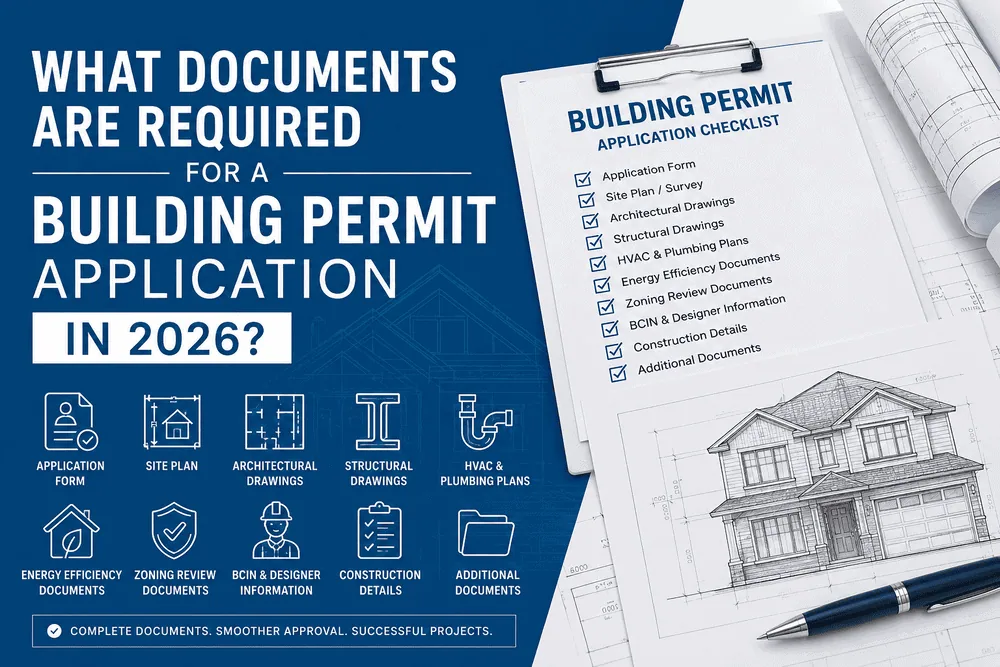
Main Building Permit Application Documents Required in 2026
1. Building Permit Application Form
Every permit submission starts with an official application form.
This form usually includes:
- Property owner details
- Project address
- Description of work
- Estimated construction cost
- Contractor or designer information
Most Ontario municipalities now allow online permit submissions.
2. Site Plan or Property Survey
A site plan shows where the building sits on the property.
Municipalities use this document to review:
- Property lines
- Setbacks
- Lot coverage
- Existing structures
- Proposed additions
- Driveways and walkways
For larger projects, a professional property survey may also be required.
3. Architectural Drawings
Architectural drawings are one of the most important parts of the permit package.
They show what changes are being made and how the finished project will look.
Common permit drawings include the following:
- Floor Plans: Shows room layouts, dimensions, doors, windows, and stairs.
- Elevation Drawings: Shows the outside view of the building from different sides.
- Section Drawings: Shows how structural parts connect inside the building.
- Roof Plans: Shows roof layout, slope, drainage, and construction details.
Most municipalities require scaled and accurate drawings for permit approval.
4. Structural Drawings and Engineering Details
Some projects also need structural engineering documents.
This is common for:
- Load-bearing wall removal
- Large home additions
- Foundation changes
- Steel beam installations
- Multi-story renovations
- Commercial construction
Engineering drawings help confirm the structure will remain safe after construction is completed.
In many Ontario municipalities, stamped engineering drawings are required for structural work.
5. HVAC and Plumbing Plans
Mechanical systems may also need approval depending on the project.
These documents can include:
- HVAC layouts
- Ventilation plans
- Plumbing diagrams
- Ductwork layouts
- Drainage systems
- Exhaust details
These plans help confirm the building meets ventilation and plumbing standards.
6. Energy Efficiency Documents
Ontario continues to focus heavily on energy-efficient construction in 2026.
Many permit applications now require additional energy compliance forms.
Common Energy Documents Include
- SB-12 Energy Efficiency Design Summary
- Insulation specifications
- Window and door performance details
- Heat loss calculations
These documents help municipalities confirm the project meets current energy efficiency requirements.
7. Zoning Review Documents
Before issuing a permit, municipalities also review zoning compliance.
Depending on the project, additional documents may be requested.
These Can Include
- Minor variance approvals
- Committee of Adjustment decisions
- Zoning review forms
- Lot grading details
If a project exceeds setback or height limits, extra approvals may be needed before the permit can move forward.
8. BCIN and Designer Information
In Ontario, permit drawings are often required to be prepared by qualified designers.
Municipalities may request:
- BCIN information
- Designer registration details
- Schedule forms
- Designer declarations
Working with experienced permit designers can help avoid submission mistakes and unnecessary delays.
9. Existing and Proposed Construction Details
Permit reviewers usually need to see both the current layout and the proposed changes.
This may include:
- Existing floor plans
- Demolition layouts
- Proposed renovation details
- Structural modifications
- Material specifications
Clear drawings help make the review process smoother.
10. Additional Documents That May Be Required
Some projects need extra approvals or supporting documents.
Depending on the location and project scope, municipalities may request:
- Arborist reports
- Conservation authority approvals
- Grading plans
- Septic approvals
- Fire separation details
- Heritage approvals
- Accessibility compliance documents
Larger or more complex projects usually require more documentation.
Common Reasons Permit Applications Get Delayed
A lot of permit delays happen because applications are incomplete.
Some of the most common issues include:
- Missing drawings
- Incorrect measurements
- Incomplete forms
- Zoning conflicts
- Missing engineering details
- Low-quality plans
- Missing energy compliance forms
Even small errors can add extra review time. In some cases, homeowners who build without a permit may face additional inspections, penalties, or delays before projects can be approved.
How Long Does Building Permit Approval Take in Ontario?
Permit timelines depend on several factors, including:
- Municipality
- Project size
- Type of construction
- Application completeness
- Additional approvals required
Simple residential projects may move faster, while larger additions or structural renovations can take longer.
Submitting complete and accurate documents from the start usually helps avoid delays.
Why Professional Permit Drawings Matter
Many homeowners don’t realize how detailed permit submissions need to be until revisions are requested.
Professionally prepared drawings can help:
- Speed up approvals
- Reduce correction requests
- Improve code compliance
- Prevent design mistakes
- Make construction planning easier
Experienced permit designers understand what Ontario municipalities expect during the review process.
Tips for Preparing a Building Permit Application in 2026
Start Early
Permit preparation often takes longer than expected, especially for larger projects.
Check Local Municipal Requirements
Every Ontario municipality has slightly different permit requirements.
Work With Qualified Professionals
Professional designers and engineers can help prevent costly mistakes.
Review Your Documents Carefully
Double-check measurements, notes, and application details before submission.
Prepare for Additional Reviews
Some projects may require zoning approvals or engineering reviews before permits are issued.
Building Permit Requirements Continue to Change in 2026
Municipalities across Ontario continue placing more attention on:
- Energy efficiency
- Structural safety
- Fire protection
- Accessibility
- Environmental impact
- Zoning compliance
Because of this, permit applications are becoming more detailed and document-heavy than in previous years.
Preparing everything properly from the beginning can save time, reduce stress, and help projects move forward more smoothly.
Need Help Preparing Building Permit Drawings in Ontario?
Preparing permit documents can feel overwhelming, especially for additions, structural renovations, or custom home projects.
Working with experienced professionals can make the process much easier.
Dinh Design Services provides permit drawings, residential design, architectural planning, and building permit support for homeowners across Ontario.
Their team helps clients prepare permit-ready documents that align with Ontario Building Code requirements and local municipal guidelines.
Frequently Asked Question (FAQs)
Most applications require permit forms, site plans, architectural drawings, structural details, and energy efficiency documents.
In many cases, yes. Ontario municipalities often require professionally prepared drawings for additions, renovations, and structural changes.
A BCIN (Building Code Identification Number) identifies qualified designers registered under Ontario’s building code system.
Yes. Missing drawings or incomplete information are common reasons permit applications are delayed or rejected.
Engineering drawings are commonly needed for structural changes, beam installations, foundation work, and large additions.
Approval timelines vary depending on the municipality and project complexity. Complete applications are usually processed faster.